Golden Spike: where the two railroads met at Promontory Summit
Replica locomotives, a marked last-spike site and a 15-mile segment of the original railroad sit at the northern end of the Great Salt Lake.
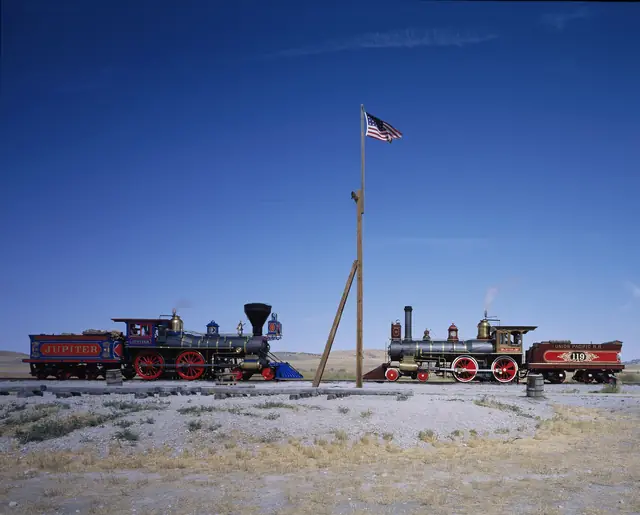

A polished wooden railroad tie and a commemorative plaque mark the spot where the ceremonial last spike was driven on May 10, 1869. It is a short walk from the visitor center. Representatives of the Central Pacific and Union Pacific Railroads joined the nation by rail here, in the remote Promontory Summit region at the northern end of the Great Salt Lake.
Golden Spike National Historical Park preserves 2,735 acres around a 15-mile segment of the original transcontinental railroad. One paved road leads into the historic valley. In winter, snow and ice can make the grade into Promontory Summit hazardous, and park staff will close the road temporarily when they need to.
The locomotives are the other draw. The locomotives are Victorian era replicas, and each day they are moved out to the Last Spike Site to recreate the marriage of the rails. The steam and the noise are part of the show, and the park asks that pets be closely supervised during demonstrations. Pets are welcome in the park on a leash, though not inside the visitor center. One park photo shows a recreation of the famous champagne photo during the annual May 10th Commemoration.
The visitor center has exhibits, a theater, a bookstore and picnic areas. The park also has a seven minute introduction movie, which is a reasonable length of time to spend learning what you are about to walk into.
Plan the logistics before you leave. Fuel, food and other services are not available within 27 miles of the park, so fill the tank and pack the lunch at home. Cell coverage is limited. The park lists high winds, insects, extreme temperatures and wildlife as things you may meet, and shelter is limited, so dress for the weather you can see and the weather you cannot.
The park calls its visitor center the best place to start exploring this unique piece of American history, and the original grade is part of it. Fifteen miles of it were prepared for track by the two railroad companies, and you can walk it or drive it. The park's outdoor features include the Big Fill Trail and the East Auto Tour, and visitors can see 1869 railroad construction features.
Sources
Written from the pages above. Spotted something wrong? Tell us.