From three rooms in the Park Building to more than 20 galleries
The Utah Museum of Fine Arts began as a small gallery of local paintings on the University of Utah campus and now holds over 22,000 objects.
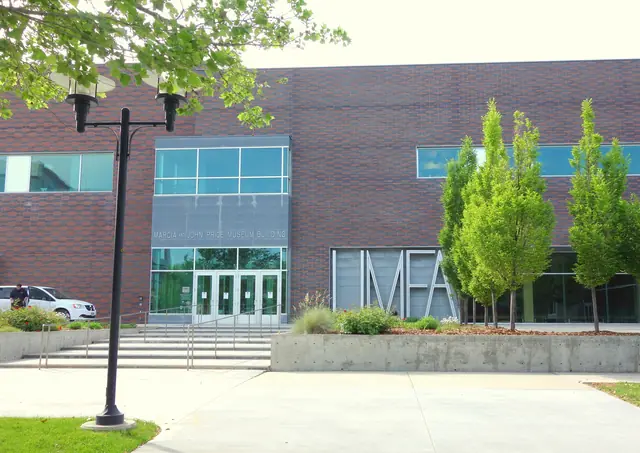

The Utah Museum of Fine Arts started as a three-room gallery on the top floor of the University of Utah's Park Building in the early 1900s. Paintings by local artists filled it. Today the museum has more than 20 galleries, plus a cafe and a store, all under one roof.
Getting from one to the other took a while. Over the next six decades, the university's art department received major gifts, and donors made specific requests to turn the gallery into a museum. Once the renovation was finished, university president A. Ray Olpin established it as the Utah Museum of Fine Arts on May 6, 1951. In the mid-1900s the collection was around 800 objects. It now numbers over 22,000 and spans 5,000 years of human creativity. The museum credits generations of curators, museum employees, and countless donors.
The museum relocated in 1970, and the Annual Friends of the Art Museum Acquisition Fund was formed afterward to expand the collection. Growth eventually called for a larger building. Machado Silvetti and Prescott Muir Architects designed it, and the 70,000-square-foot Marcia and John Price Museum Building opened on June 2, 2001. In February 2005, the Utah State Legislature declared the UMFA an official state institution.
In August 2004, the museum learned that an oil painting stolen during the Holocaust had entered its collection by donation in 1993. The painting was Les Amoureaux Jeunes, an 18th-century work by François Boucher, taken by Hermann Göring from the collection of the French Jewish gallery owner Andre Jean Seligmann. The museum returned it to the heirs of its original owner.
The current exhibitions pick up the building's own story. For the Future: Collecting at the UMFA, 2001 to 2026, celebrates the Marcia and John Price Museum Building and is now on view. Onishi Yasuaki: Stone on Boundary is also on view. salt 18: Amor Muñoz goes on view October 24, 2026. The permanent collection includes European works from the 14th to the 19th centuries, with artists such as Filippo Lippi, along with the American artist Albert Bierstadt and, among modern and contemporary holdings, Yayoi Kusama. Works are displayed on a rotating basis, so the walls change.
One donor in particular left a mark on the museum. Natacha Rambova was a ballerina, a Hollywood designer, an actress, one half of a celebrity power couple, and had a serious career in Egyptology. Her portrait is on view in the UMFA portrait hall.
Sources
Written from the pages above. Spotted something wrong? Tell us.